
Selling Italian food in the UK: a practical guide for first-time exporters
Channels, pricing, labels and paperwork: what an Italian food producer needs to know before chasing its first British buyer.
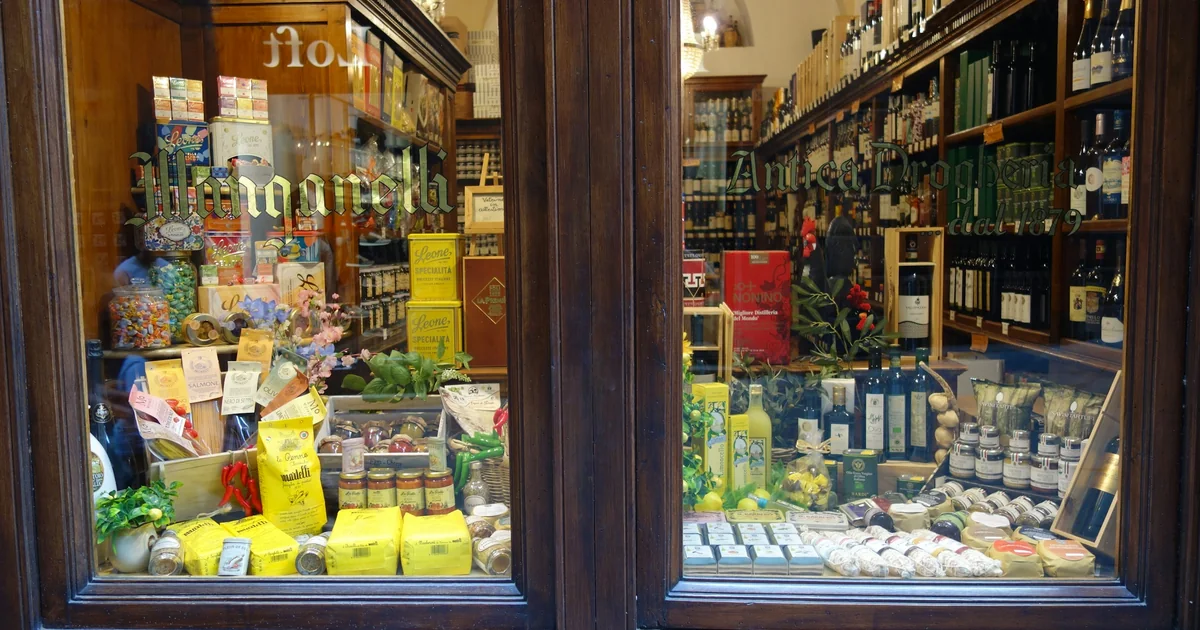
British shoppers love Italian food. Pasta, olive oil, cheese, cured meats and wine are on every supermarket shelf and every high street menu. Yet many Italian producers approach the UK as if it were just another European market, and are surprised when the first conversations go nowhere. Since Brexit, it isn't one. Here is what we tell every producer we work with before they chase their first British buyer.
Start with the buyer, not the product
The question is not "will the British like my product?" but "who, exactly, is going to buy it from me?". For a first-time exporter there are usually four doors:
- Specialist importers and distributors of Italian or fine foods. They know the paperwork, hold stock in the UK and already sell to delis, restaurants and retailers. For most first-timers, this is the right door.
- Foodservice wholesalers, who supply restaurants, hotels and cafés (the HoReCa channel). Volumes can be good; price pressure is real.
- Independent retailers: delis, farm shops and premium grocers. Great for building a brand story, smaller orders, more admin.
- Supermarkets and large retailers. Big volumes, long lead times, strict specifications and supporting costs. Rarely the first step.
Choosing the channel first changes everything that follows: price list, pack sizes, labels, even the way you present your company.
Price for the whole chain
The most common mistake we see is a price list built from the factory gate. Between your warehouse and the British consumer there are several hands, and each one needs a margin.
| Step in the chain | What it adds | What to ask |
|---|---|---|
| Producer (you) | Ex-works or delivered price | Which Incoterm are you quoting? |
| Transport & customs | Freight, brokerage, border checks | Who is the importer of record? |
| Importer / distributor | Margin, storage, sales force | What retail price do they expect? |
| Retailer or restaurant | Margin, plus VAT where applicable | Where will it sit on the shelf or menu? |
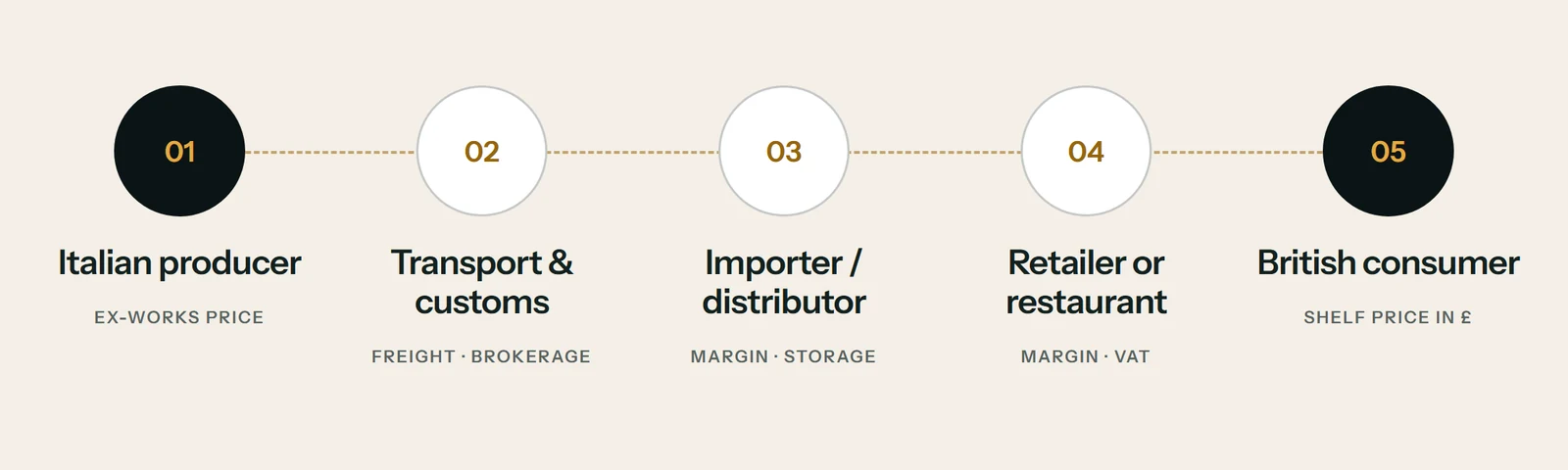
Work backwards from a realistic shelf price in pounds, and you will know in five minutes whether the deal can work.
Get the paperwork right before the first pallet
Since Brexit, goods moving from Italy to Great Britain need customs declarations on both sides, EORI numbers and a clear importer of record. On top of that, food has its own rules:
- Labels. Prepacked food sold in Great Britain generally needs a UK address for the responsible food business, usually your importer, alongside the usual allergen and nutrition information in English.
- Border controls. Products of animal origin and some plant products need health certificates and pre-notification under the UK's border model for imports from the EU.
- Alcohol. Since August 2023, UK alcohol duty is calculated on the strength of each drink, so the ABV of your wine or liqueur directly affects its price.
These rules keep evolving, not least as the UK and the EU work on a new agreement on food and plant health checks. Always check the current guidance with a customs broker before you ship.
The most expensive mistake is a pallet stuck at the border because the label was designed for Italy.
Tell the story, in British English
British buyers love provenance (the family, the region, the method) but they are busy. Prepare a one-page sales sheet with:
- prices in GBP, minimum order quantities and lead times;
- shelf life, pack formats and pallet configuration;
- certifications such as DOP, IGP or organic, explained in one line each;
- two or three sentences of story, not two pages.
Then send samples. Nothing sells Italian food like tasting it.
Be patient, and measure everything
Buyers plan their ranges months in advance, and a good first meeting is often followed by weeks of silence. Keep a simple pipeline: who you contacted, when, what they said, what happens next. Trade shows such as IFE or the Speciality & Fine Food Fair in London can speed things up, but only if you arrive with a list of meetings, not just a stand.
Where Perpi fits
This is the work we do with Italian companies entering the UK, especially in specialist and regulated sectors: market map, UK-ready offer, introductions to the right partners and coordination of logistics and compliance. If you are thinking about the British market, see how our UK Market Entry service works or simply get in touch.

Founder of Perpi Ltd. Formerly at Sony Europe, now helping small companies, startups and Italian businesses grow in the UK.
About